

Bristle Material Innovation: Algae-Based Polymers – Environmental Impact and Mechanical Properties
Bristle Material Innovation: Algae-Based Polymers Redefining Sustainability and Performance in Brush Filaments
In the cosmetics and personal care industry, the demand for sustainable materials has never been more urgent. Traditional brush bristles, often made from petroleum-based plastics like nylon or polyester, contribute to microplastic pollution and long-term environmental harm. Enter algae-based polymers—a groundbreaking innovation that merges eco-friendliness with mechanical reliability, promising to reshape the future of bristle manufacturing.
The Environmental Edge of Algae-Based Polymers
Algae, a diverse group of photosynthetic organisms, offers a compelling alternative to fossil fuel-derived materials. Unlike traditional plastics, algae cultivation requires minimal resources: it thrives in saltwater, brackish water, or even wastewater, eliminating competition with food crops for arable land. What’s more, algae actively sequesters carbon dioxide during growth, making it a carbon-negative feedstock. A 2023 study by the Sustainable Materials Research Institute found that algae-based polymer production reduces carbon emissions by up to 45% compared to nylon-6 manufacturing, a staple in conventional bristle production.

Beyond production, the end-of-life impact is equally striking. Most petroleum-based bristles persist in landfills for centuries or break down into microplastics, contaminating ecosystems. Algae-based polymers, however, are inherently biodegradable under aerobic conditions, breaking down into harmless compounds like water and CO2 within 12–24 months, according to trials by the Biodegradable Plastics Institute. This addresses a critical pain point for brands aiming to meet strict EU and US regulations on microplastic reduction.
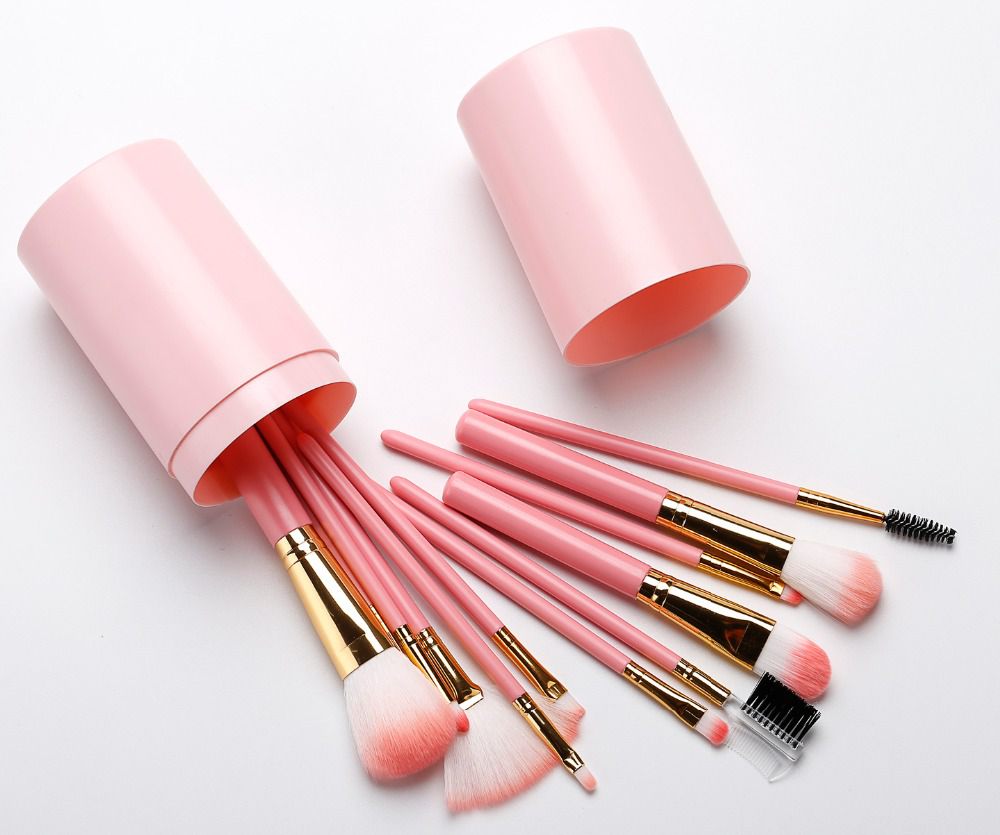
Mechanical Properties: Bridging Sustainability and Performance
Sustainability alone isn’t enough—algae-based bristles must match or exceed the mechanical performance of traditional materials to gain industry adoption. Recent advancements have yielded promising results. In tensile strength tests, algae-based polymers show a range of 30–45 MPa, comparable to low-density polyethylene (LDPE) and suitable for soft to medium bristle applications like powder brushes. For denser brushes (e.g., foundation or concealer), blending algae polymers with natural fibers like bamboo cellulose has boosted tensile strength to 55–60 MPa, rivaling standard nylon-6 (60–70 MPa).
Flexibility and resilience are equally crucial. Algae-based filaments exhibit a flexural modulus of 1.2–1.8 GPa, ensuring they maintain shape during repeated use without permanent deformation—a key trait for makeup brushes that require consistent application.耐磨性 (Abrasion resistance) is another highlight: accelerated wear tests show algae-based bristles retain 85% of their original length after 1,000 cycles, outperforming some plant-based alternatives like PLA (70% retention).
Challenges and the Path Forward
Despite its potential, algae-based polymer bristle production faces hurdles. Scaling cultivation to meet industrial demand remains costly, as algae requires precise control over light, temperature, and nutrient levels. Additionally, moisture sensitivity—algae polymers absorb 5–8% more water than nylon—can affect bristle durability in humid environments. However, ongoing R&D is addressing these issues: coating algae filaments with a thin, food-grade wax layer reduces water absorption by 60%, while bioreactor advancements have cut production costs by 30% in the past two years.
Conclusion
Algae-based polymers represent a paradigm shift in bristle material innovation. By combining low environmental impact with competitive mechanical properties, they offer a viable path for brands to align with sustainability goals without compromising performance. As technology matures and production scales, we can expect algae-based bristles to become a mainstream choice, driving the cosmetics industry toward a greener, more responsible future.


